
Affiliate Disclosure: This article contains affiliate links. If you purchase through a qualifying link, we may earn a commission at no additional cost to you. This ECO-WORTHY 280Ah Battery review is based on published product specifications, available product information, visible customer feedback, comparison research, and practical buying considerations. We have not personally conducted hands-on testing of the ECO-WORTHY 12V 280Ah LiFePO4 battery.
Quick Verdict: ECO-WORTHY 280Ah Battery
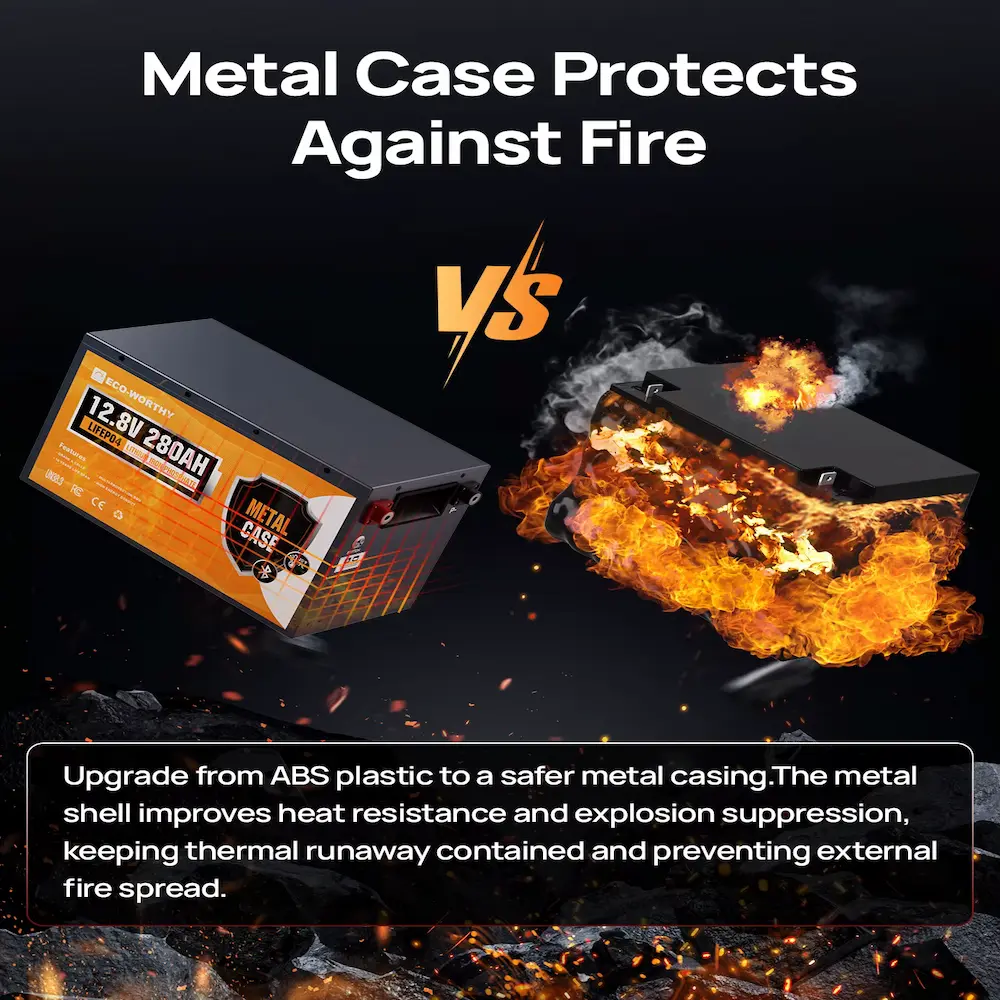
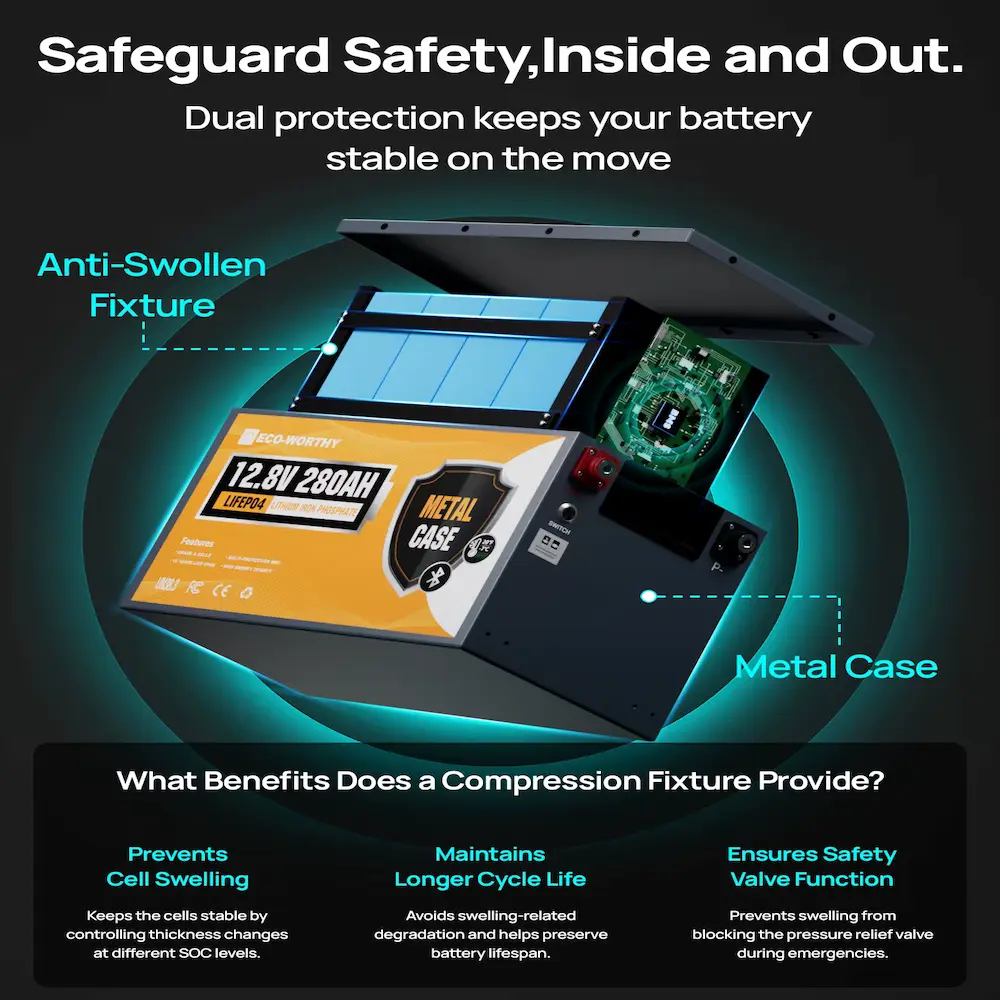
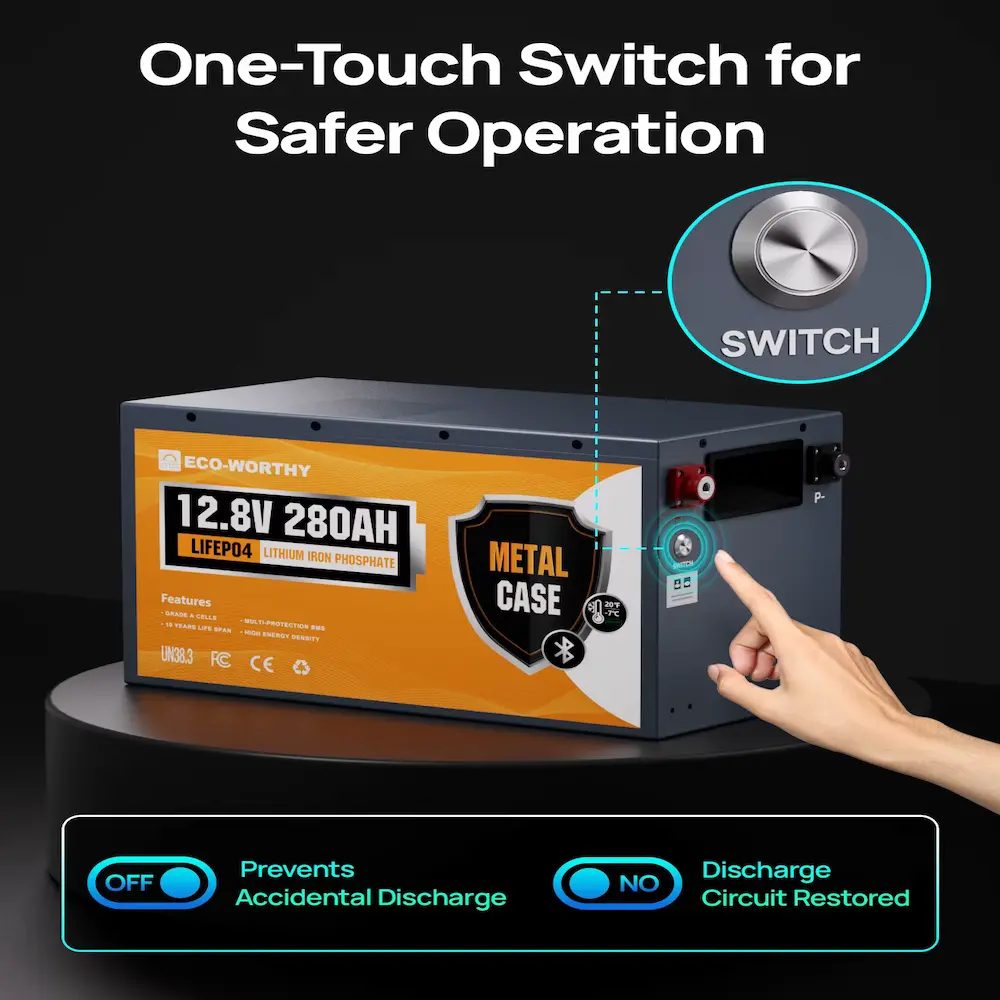
The ECO-WORTHY 280Ah Battery is a large-format 12V LiFePO4 battery designed for applications such as RVs, campervans, solar storage, backup power and off-grid systems. It combines a 12.8V nominal voltage, 280Ah capacity and 3,584Wh rated energy with Bluetooth monitoring and a built-in battery management system.
The battery’s biggest attraction is its large capacity. A 3,584Wh battery can provide considerably more stored energy than smaller 100Ah or 200Ah 12V lithium batteries, while the LiFePO4 chemistry is commonly used for stationary, RV and off-grid energy storage.
ECO-WORTHY’s current information lists a 200A maximum continuous charge/discharge capability for this metal-case version, along with low-temperature charging protection and multiple series/parallel configurations. Exact specifications can vary between ECO-WORTHY 280Ah versions, so buyers should confirm the selected variant before ordering.
Our Research-Based Rating: 4.4/5
This rating is based on the published specifications, configuration options, practical use cases and available product information. It does not represent hands-on testing.
ECO-WORTHY 280Ah Battery Specifications
| Feature | Details |
|---|---|
| Brand | ECO-WORTHY |
| Battery Type | LiFePO4 / Lithium Iron Phosphate |
| Nominal Voltage | 12.8V |
| Capacity | 280Ah |
| Rated Energy | 3,584Wh |
| Bluetooth | Yes |
| BMS | Built-in smart BMS |
| Maximum Continuous Charge | Up to 200A on current metal-case version |
| Maximum Continuous Discharge | Up to 200A |
| Peak Current | Up to 220A for 10 seconds on current metal-case version |
| Charging Voltage | 14.6V |
| Operating Voltage | 9.2–14.6V on current metal-case specification |
| Low-Temperature Protection | Yes |
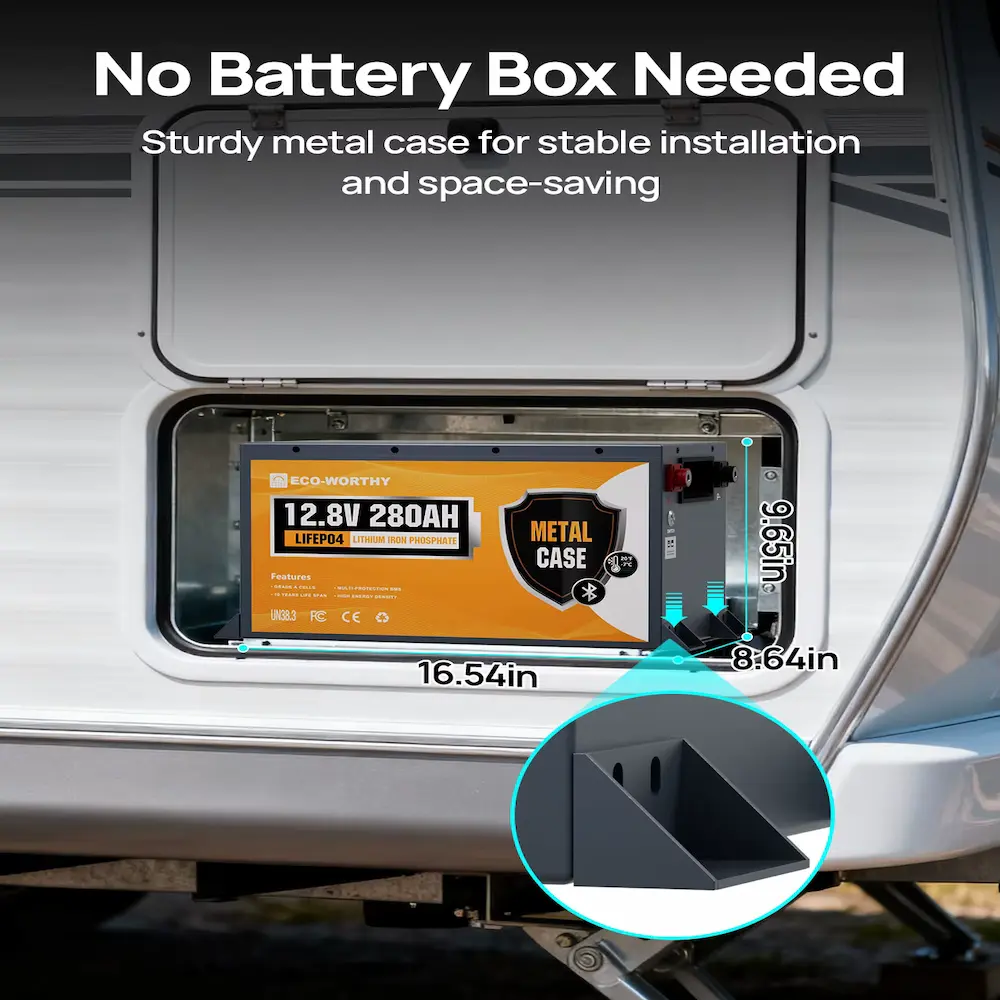
| Dimensions | Approximately 420 × 219.3 × 245mm for current metal-case version |
| Weight | Approximately 31.05kg / 68.5lb for current metal-case version |
| Series/Parallel Expansion | Multiple configurations supported |
| Bluetooth Monitoring | Yes |
| Chemistry | LiFePO4 |
| Main Applications | RV, campervan, solar, backup and off-grid systems |
ECO-WORTHY publishes slightly different dimensions and weight for different 280Ah versions, so the exact selected enclosure should be checked before purchase. Other official product documentation lists approximately 453 × 238 × 221mm and around 28.5kg for another 12V 280Ah configuration.
What Is the ECO-WORTHY 280Ah Battery?
The ECO-WORTHY 12V 280Ah battery is a large-capacity lithium iron phosphate battery designed for systems that need substantial stored energy without using traditional lead-acid batteries.
Its nominal capacity is 280Ah at 12.8V. Multiplying those figures gives approximately 3,584Wh, which is the advertised energy capacity.
That makes the battery considerably larger than common 12V 100Ah batteries. It can therefore be useful when an RV, campervan, solar setup or backup-power system needs longer operating time between charging cycles.
The battery also includes Bluetooth monitoring. Depending on the version and associated app, users can monitor information such as battery voltage, state of charge and charging or discharging activity from a compatible smartphone.
3,584Wh Capacity for Large Power Needs
Capacity is the main reason to consider this battery.
At 3,584Wh, the battery has enough nominal stored energy for a range of medium-to-large 12V applications. The actual usable energy will depend on the system’s inverter efficiency, battery-management settings, load size and recommended depth of discharge.
For example, a theoretical 500W load would consume 500Wh for every hour of continuous operation. A 1,000W load would consume about 1,000Wh per hour.
Real-world runtime will be lower than a simple capacity calculation suggests because electrical systems have conversion losses and because users should not treat the entire rated capacity as guaranteed usable output.
For this reason, the 3,584Wh specification is best viewed as the battery’s nominal energy rating rather than a promise of a particular runtime.
LiFePO4 Chemistry and Long-Term Use
The battery uses LiFePO4, or lithium iron phosphate chemistry.
This chemistry has become popular in RV, solar and off-grid applications because it offers high energy density compared with lead-acid batteries and can support a large number of charge cycles when operated within suitable conditions.
ECO-WORTHY documentation for its 280Ah battery family lists thousands of cycles under specified depth-of-discharge conditions. One current manual lists more than 6,000 cycles at 80% depth of discharge, while other documentation specifies different test conditions. These figures should therefore be interpreted according to the manufacturer’s stated testing conditions rather than as a guaranteed lifespan for every installation.
The advantage for buyers is that LiFePO4 technology can make sense for systems that cycle regularly rather than only providing occasional emergency backup.
200A BMS and Battery Protection
A battery management system, or BMS, is one of the most important components inside a large lithium battery.
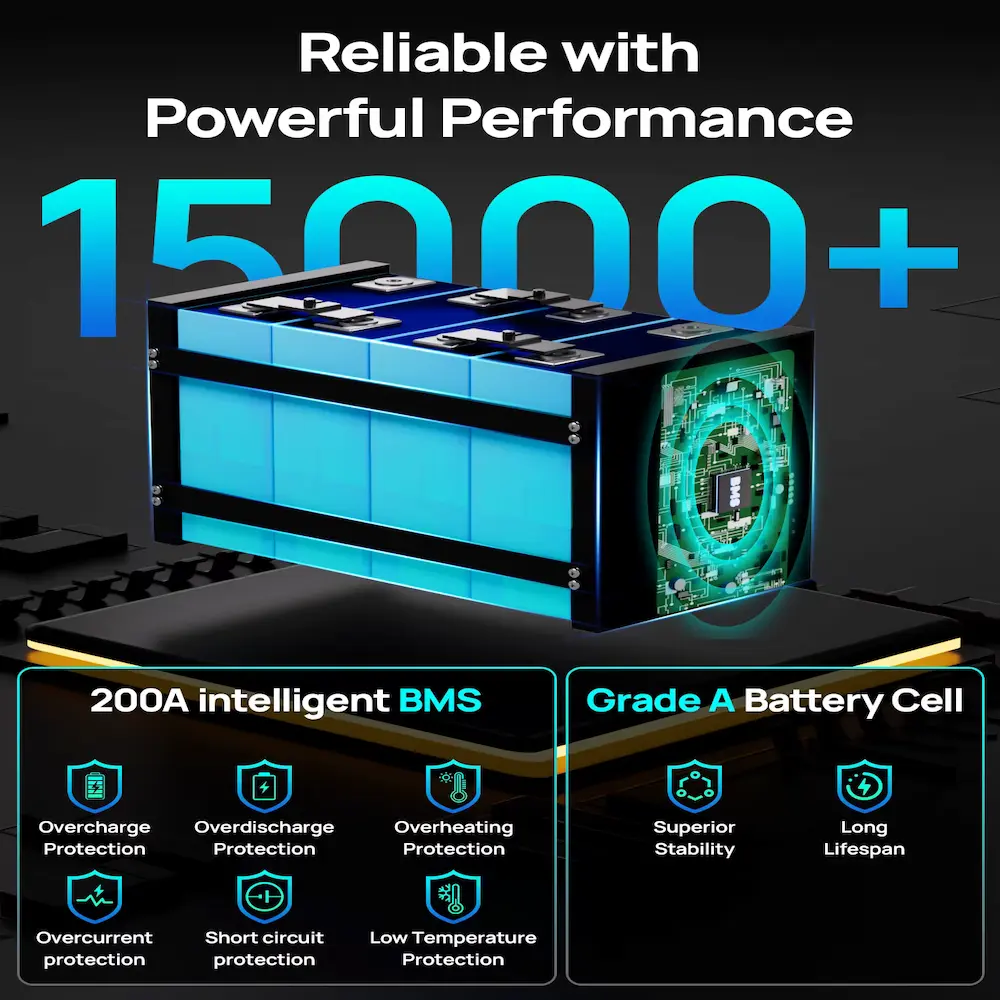
The current ECO-WORTHY metal-case 280Ah version uses a 200A BMS. The manufacturer describes protection against conditions such as overcharge, over-discharge, overcurrent, short circuit and temperature-related problems.
That protection is important because a 280Ah battery stores a substantial amount of energy.
The BMS also helps manage the battery when it operates with high current loads. However, a BMS should not be treated as a replacement for correct wiring, fusing, cable sizing, ventilation, charging equipment and proper installation.
The complete power system still needs to match the battery’s electrical specifications.
Bluetooth Battery Monitoring
Bluetooth monitoring is one of the more convenient features of this battery.
Instead of relying entirely on a separate battery monitor, users can use the compatible ECO-WORTHY application to view battery information wirelessly.
Depending on the version, available information can include:
- Battery voltage
- Charge status
- Discharge status
- State of charge
- Current
- Temperature information
- Protection or fault information
This feature can be especially useful inside an RV or campervan because the battery may sit in a storage compartment where checking physical indicators is inconvenient.
Bluetooth monitoring does not replace proper system monitoring for complex solar installations, but it can provide a convenient view of the battery’s status.
Low-Temperature Charging Protection
Low-temperature protection is another useful feature for RV and outdoor applications.
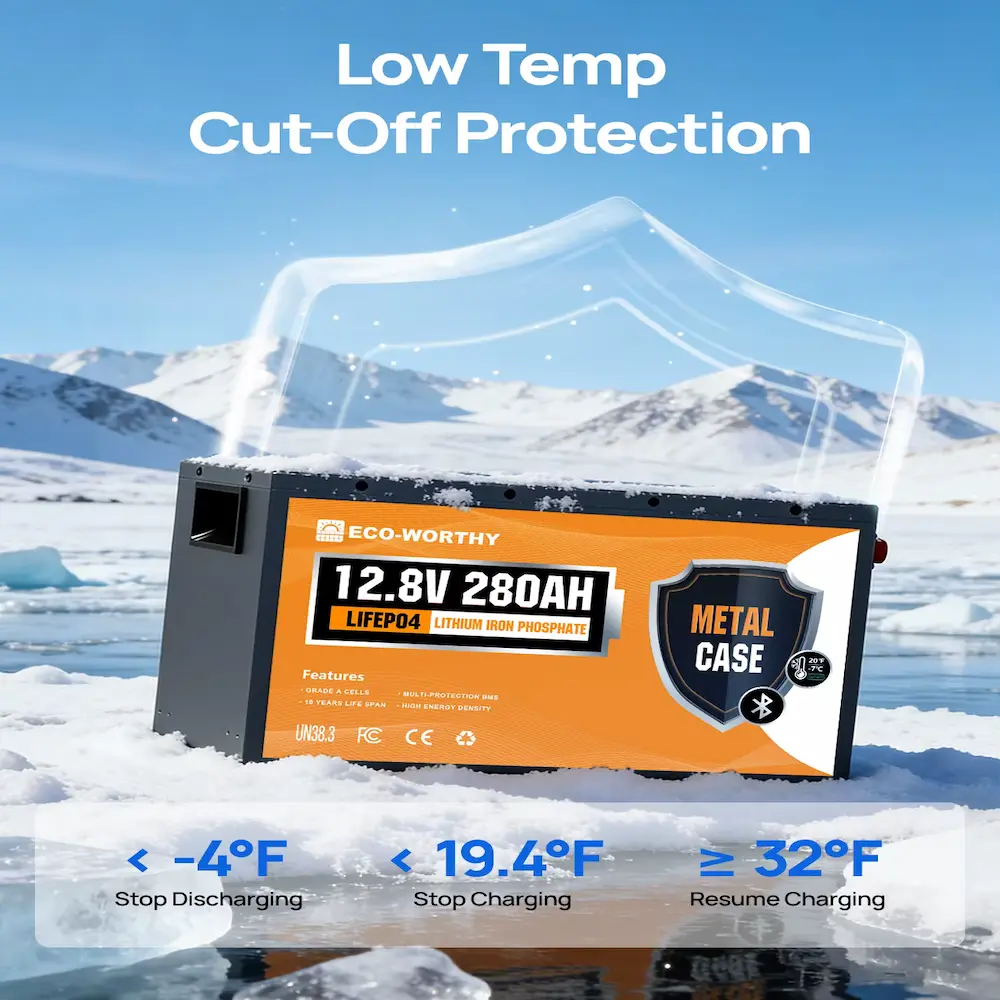
Lithium batteries should not simply be charged at any temperature. The ECO-WORTHY documentation for this battery family specifies a low-temperature charging cutoff, with one current manual listing charging protection below approximately -7°C / 19.4°F and charging resuming above 0°C / 32°F.
That protection matters for users who operate an RV, campervan or off-grid system during colder weather.
The exact temperature thresholds can vary between ECO-WORTHY battery versions, so buyers should confirm the manual for the specific model they order.
ECO-WORTHY 280Ah Battery for RVs and Campervans
RV and campervan owners are among the clearest potential users for this battery.
A 280Ah 12V battery can provide a substantial energy reserve for appliances and electronics when the vehicle is not connected to shore power.
Possible applications include:
- LED lighting
- Refrigeration
- Fans
- Small appliances
- Electronics
- Water pumps
- Communications equipment
- Inverter-powered devices
- Solar energy storage
The large capacity can reduce how frequently the battery needs recharging, although actual runtime depends heavily on the combined load.
Weight is the main consideration. Depending on the exact version, the battery weighs roughly 28.5–31kg, so installation location and mounting strength matter.
Solar and Off-Grid Applications
The battery can also form part of a 12V solar-storage system.
For an off-grid installation, the battery can store energy generated during the day and make that energy available later.
A typical system might combine:
- Solar panels
- MPPT charge controller
- ECO-WORTHY 280Ah battery
- Inverter
- DC loads
- Appropriate fuses and disconnects
- Battery monitoring
The battery itself does not determine the performance of the entire solar system. The solar array, charge controller, inverter and wiring all need to match the battery’s voltage and current requirements.
Buyers should therefore design the complete system rather than purchasing a large battery first and selecting the other components afterwards.
Series and Parallel Expansion
Another useful feature is system expansion.
ECO-WORTHY documentation supports multiple series and parallel configurations for its 12V 280Ah batteries. Depending on the exact model, users can combine batteries to increase either capacity or system voltage.
For example, connecting compatible batteries in parallel can increase available amp-hour capacity while retaining a 12V-class system. Series configurations can increase system voltage for installations designed around higher-voltage battery banks.
These configurations require compatible batteries, correct wiring and appropriate system design.
Do not mix batteries with significantly different specifications, ages or conditions without confirming compatibility and following the manufacturer’s instructions.
ECO-WORTHY 280Ah Battery and Power Inverters
The large 280Ah capacity makes the battery suitable for pairing with an inverter, but the inverter must match the battery system.
A 12V battery can deliver high current when an inverter powers a large AC load. For example, a 1,000W AC load can require substantially more than 80A from a 12V battery after accounting for conversion losses.
Larger loads can therefore require very substantial cables, appropriate fusing and careful installation.
This is one reason buyers should not choose an inverter based only on its advertised wattage. The battery’s current capability, inverter efficiency, cable length, fuse rating and system voltage all matter.
Safety and Charging Considerations
Large lithium batteries require careful handling.
The National Fire Protection Association notes that lithium-ion batteries store substantial energy and can present fire hazards if damaged, improperly used or incorrectly charged. It recommends following manufacturer instructions and using the correct battery and charging equipment.
For the ECO-WORTHY 280Ah battery, buyers should therefore:
- Use a compatible LiFePO4 charger
- Follow the manufacturer’s charging voltage
- Use correctly sized cables
- Install appropriate overcurrent protection
- Avoid physical damage to the battery
- Keep terminals properly secured
- Avoid charging outside the specified temperature range
- Protect the battery from water and severe environmental exposure
- Follow the manufacturer’s installation instructions
The battery’s BMS provides important protection, but safe installation remains essential.
Customer Feedback and Buyer Experience
The ECO-WORTHY 280Ah battery family has appeared across multiple marketplaces and retailers, with customer feedback generally focusing on capacity, installation, Bluetooth monitoring and RV/off-grid applications.
Commonly discussed advantages include the large energy capacity, lithium chemistry, relatively compact footprint compared with equivalent lead-acid storage, and the convenience of Bluetooth monitoring.
Some users also choose ECO-WORTHY batteries because the company offers related solar components, including panels, charge controllers, inverters and other batteries.
Customer experiences can vary depending on the battery generation, seller, shipping warehouse and exact configuration. For that reason, buyers should pay attention to the exact model number and specification sheet rather than relying only on the general product family name.

ECO-WORTHY 280Ah Battery vs. Lead-Acid Batteries
One of the main reasons to choose a battery like this is to move away from traditional lead-acid storage.
A comparable lead-acid bank can be substantially heavier and may require more physical space for similar nominal capacity.
LiFePO4 batteries can also offer a higher cycle-life potential under appropriate conditions.
However, lithium batteries usually require more careful attention to charging compatibility and battery-management requirements. They also have a higher initial equipment cost than basic lead-acid alternatives.
For frequent cycling, the longer service-life potential can be an important consideration. For occasional backup use where upfront cost matters most, buyers may evaluate the alternatives differently.
Related Tool: ECO-WORTHY Battery and SucceBuy Jack Hammer
A large 12V lithium battery can also be useful in mobile work environments where electrical equipment forms part of an off-grid or portable power system.
If you are building a broader tool and workshop setup, you can also compare the SucceBuy 1400W Jack Hammer Review 2026: Is It Worth Buying?. The two products serve completely different purposes, but both can fit into a larger equipment collection for workshop, construction or mobile-use scenarios.
ECO-WORTHY Battery and Waterproof Electrical Connections
Battery installations also require suitable electrical connectors and wiring.
For outdoor, RV and mobile installations, environmental protection around electrical connections matters because vibration, moisture and dirt can affect connections over time.
You can also compare the 2 Pin Waterproof Connector Review 2026: Is It Worth Buying? when considering connectors for compatible low-voltage electrical projects.
The correct connector depends on the circuit’s voltage, current, wire gauge, environmental exposure and connector specifications. Never select a connector based only on its physical appearance.
ECO-WORTHY 280Ah Battery: Pros and Cons
Pros
- Large 280Ah capacity
- 3,584Wh nominal energy
- 12.8V LiFePO4 chemistry
- Bluetooth monitoring
- Built-in BMS
- Low-temperature charging protection
- High continuous current capability on current versions
- Suitable for RV and campervan applications
- Useful for solar and off-grid storage
- Expandable through supported series/parallel configurations
- Much lighter than comparable lead-acid capacity
- Multiple ECO-WORTHY energy-storage products can be integrated into a broader system.
Cons
- Heavy at roughly 28.5–31kg depending on version
- Exact specifications vary between 280Ah configurations
- Requires compatible LiFePO4 charging equipment
- Large inverter loads can require very high DC
- Installation needs correctly sized cables and protection
- Bluetooth monitoring depends on the compatible app and battery version
- Not a drop-in replacement for every existing battery system
- Current rating and dimensions should be confirmed before purchase
Who Should Consider the ECO-WORTHY 280Ah Battery?
This battery may make sense for users who need substantial 12V energy storage for:
- RVs
- Campervans
- Motorhomes
- Off-grid cabins
- Solar storage
- Backup power
- Mobile workstations
- 12V electrical systems
- Larger recreational power setups
The 3,584Wh capacity is particularly attractive for users who want more storage than a typical 100Ah or 200Ah battery can provide.
Bluetooth monitoring also makes the battery appealing to users who want convenient access to battery information from a smartphone.
Who Should Skip It?
The battery may be excessive for someone who only needs a small amount of 12V storage.
A 280Ah battery is physically large and heavy, so it may not make sense for a lightweight portable setup.
It also requires a properly designed electrical system. Buyers who simply want a battery that can be connected to an existing system without checking voltage, charger compatibility, current requirements and wiring should first confirm compatibility.
The battery is better suited to planned installations than casual plug-and-play use.
Buying Guide
Before ordering the ECO-WORTHY 280Ah battery, check these points:
1. Confirm the exact model
ECO-WORTHY sells multiple 12V 280Ah configurations. Check the model number and specification sheet for the exact listing.
2. Check the dimensions
Different versions can have different dimensions. Make sure the battery physically fits the intended compartment.
3. Check the weight
Expect a substantial battery weighing roughly 28.5–31kg depending on the version.
4. Confirm BMS specifications
Check the continuous charge and discharge ratings of the selected version.
5. Confirm charging requirements
Use a charger designed for the battery’s LiFePO4 chemistry and specified voltage.
6. Check low-temperature protection
If you plan to use the battery in cold climates, confirm the charging cutoff and operating-temperature specifications.
7. Plan your wiring
High-current 12V systems can require very thick cables and properly rated protection.
8. Match the inverter
If an inverter is part of the system, calculate its DC requirements rather than looking only at its AC wattage.
9. Check Bluetooth compatibility
Confirm that the selected battery supports the intended ECO-WORTHY app and monitoring functions.
10. Confirm series/parallel compatibility
If you plan to expand the battery bank, follow the manufacturer’s rules for compatible configurations.
Review Methodology: What We Considered
For this ECO-WORTHY 280Ah Battery Review, we considered the product information associated with the supplied AliExpress listing, ECO-WORTHY’s current published specifications, supporting battery documentation, available customer information and practical considerations for RV, solar and off-grid applications.
We did not treat marketplace marketing claims as independently verified laboratory measurements. Since no hands-on testing was conducted, this review does not claim personal experience with the battery’s actual runtime, charging speed, cycle life, Bluetooth performance or long-term durability.
Where ECO-WORTHY publishes different specifications for different 280Ah versions, those differences have been identified rather than combined into one universal specification.
ECO-WORTHY 280Ah Battery: Final Verdict
The ECO-WORTHY 12V 280Ah LiFePO4 battery offers a substantial 3,584Wh nominal capacity, Bluetooth monitoring, a built-in BMS and low-temperature charging protection. Those features make it particularly relevant to RV owners, campervan users, solar-storage projects and off-grid power systems.
Its biggest strength is the combination of high capacity and LiFePO4 chemistry. A 280Ah 12V battery can provide a large energy reserve without requiring the same type of heavy lead-acid bank.
The main considerations are physical weight, installation requirements and specification differences between ECO-WORTHY’s various 280Ah versions. Buyers should confirm the exact enclosure, dimensions, BMS current rating, temperature protection and charging requirements before ordering.
For a properly designed 12V energy-storage system, the ECO-WORTHY 280Ah battery presents a strong feature set on paper. It is most appropriate for users who genuinely need large energy storage rather than a small portable battery.
👉 Check the current ECO-WORTHY 280Ah battery listing and selected configuration carefully before purchase.